Come for the ping pong of Iran + AI news. Stay for Washington cherry blossoms 🌸
My latest Axios bylines:
Google eyes natural gas as AI power demand outpaces clean energy
Google is weighing greater use of natural gas to power its AI ambitions than previously known, according to a report released Wednesday.
Why it matters: Google has earned a reputation for prioritizing clean energy in the rush to build data centers, but new findings from a market intelligence firm suggest it may also lean more on a fossil fuel.
Driving the news: Google and Crusoe Energy are partnering to build a data center campus in North Texas called “Goodnight,” powered largely by a massive on-site natural gas plant alongside a wind farm, according to permits, satellite images and other documents reviewed by Cleanview, a market intelligence platform.
State of play: A Google representative confirmed to Michael Thomas, Cleanview’s founder and report author, that it is partnering with Crusoe on the Texas data center.
But whether Google will buy power from the gas plant — and if so, how much — remains unresolved, according to the report.
A Google spokeswoman told Axios it doesn’t have a contract in place for the Texas gas plant and declined to comment on if or when it might.
In an interview last week with Axios about its overall strategy, a top Google executive pointed to the various clean-energy projects it’s announced for its data center push, including geothermal, fusion, advanced nuclear reactors and batteries.
“I do think our public projects provide a good roadmap into how we’re thinking about solving this challenge,” Michael Terrell, Google’s head of advanced energy, said in an interview last week on the sidelines of the CERAWeek energy conference in Houston.
When asked about where natural gas fits into the company’s strategy, Terrell said: “We don’t have anything to say on that.”
The big picture: The AI race is accelerating, with climate goals slipping further down the priority list as Big Tech companies scramble to secure power, Thomas said.
Microsoft just announced a gas-powered data center deal with Chevron, and Meta is planning seven natural gas plants for what would be the largest U.S. power facility.
The intrigue: Google leads the tech industry in deploying clean energy for its AI ambitions, which may invite sharper scrutiny of its new consideration of natural gas.
“Many climate activists will see Google exploring natural gas as a sort of betrayal,” said Thomas, whose report is one of the most comprehensive reviews of the tech giant’s data center strategy to date.
“There’s no doubt that it would be in tension with the company’s stated ‘moonshot’ goal of becoming carbon-free by 2030,” he added. “But it’s also true that Google is voluntarily investing more in clean energy technology than almost any other entity — public or private — in the world.”
AI boom drives clash over grid power vs. going it alone
HOUSTON — A high-stakes fight is emerging as the AI boom accelerates: Should data centers plug into the grid, or operate as energy “islands”?
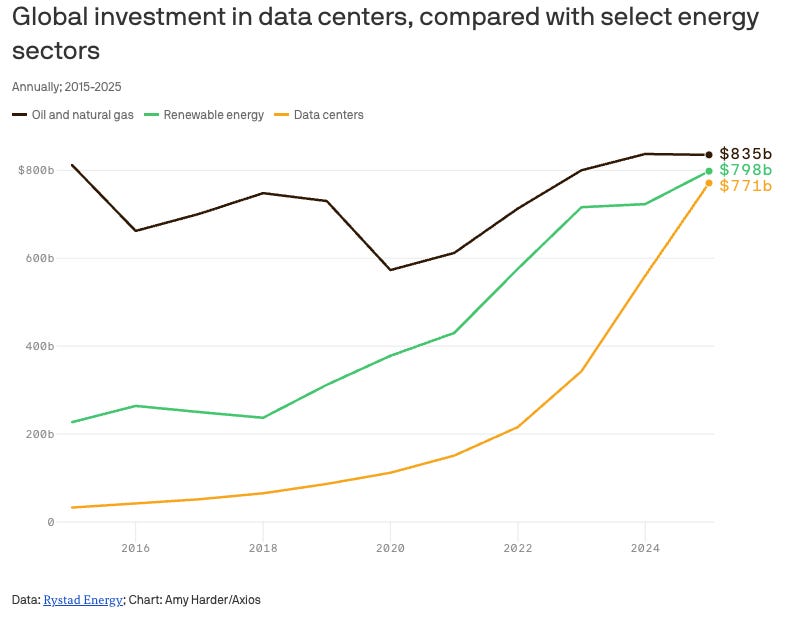
Why it matters: The debate is shaping power flows and multibillion-dollar investments, as data centers rival entire cities in their electricity demand.
Driving the news: Chevron said this week it’s working on a deal to build a natural gas plant dedicated to a Microsoft data center in Texas — one of many signs that on-site power is gaining traction.
Roughly 30% of all planned data center power capacity is expected to be on site, according to a February report by Cleanview, a market intelligence firm — up from almost nothing a year earlier.
“A lot of people look at that 30% figure from our report and assume it will stop there,” said Michael Thomas, founder of Cleanview. “But the trend line suggests to me that it could keep rising.”
“I wouldn’t be surprised if we see it rise to 50% of planned capacity,” added Thomas.
How it works: Companies building AI infrastructure say avoiding the grid — at least initially — can bypass years-long waits to connect to the grid, provide more control and avoid straining the electric system with massive new demand.
Arboretum cherry blossoms