When is it too late to wish someone a happy new year? Larry David says three days.
Read on for my latest coverage, and stay ‘til the end for a bluebird day.
Bonus: Let me know if you’re going to the World Economic Forum in Davos later this month. I’ll be there the whole week!
How AI is affecting me as a human (and journalist)
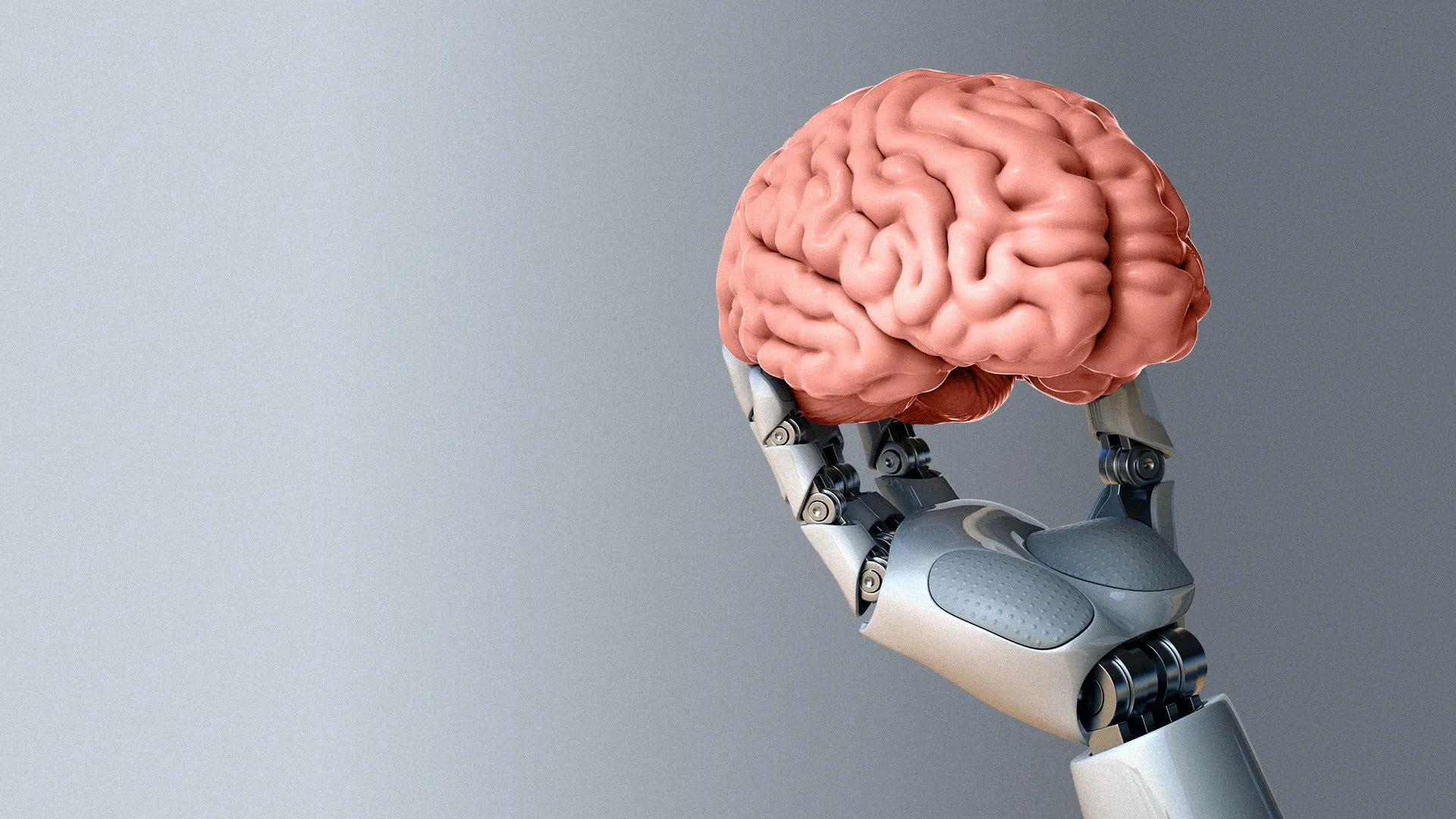
AI is making my life more convenient and my job more efficient, but it’s also tempting me to think less — and sparking new frustrations.
Why it matters: AI is infiltrating daily life faster and more aggressively than any modern technology. We’re all living experiments in its effects: the good, the bad and the unknown.
Driving the news: Early research — and plenty of anecdotes — suggest AI is already reshaping our brains.
A recent MIT Media Lab study found students who used ChatGPT to write essays showed significantly lower cognitive engagement.
One of the researchers, Nataliya Kosmyna, put it bluntly: Evolution pushes us to adopt tools that make life easier, “but your brain needs friction to learn.”
Catch up fast: When I joined Axios in September and jumped into the AI-and-energy beat, it felt like AI immersion therapy.
Axios itself is integrating AI tools into our newsroom workflow. Our journalists can use them to take a first stab at alt text for photos and charts so they’re more accessible, to research new topics, to sort through huge datasets for trends, and to get suggestions for smoother language.
The effect: I’m covering AI while also depending on it.
Flashback: History shows a long list of technologies that have made our lives easier while compelling us to let go of certain skills.
We ceded handwriting to computers.
We ceded math to calculators.
We ceded direction to GPS.
We ceded our attention to social media.
Friction point: I worry we are ceding our thinking to AI.
You know the saying, “The whole is greater than the sum of its parts.” With AI, I worry the opposite might be true — that the sum of what we’re offloading is starting to add up to something that’s the opposite of great.
I don’t need good handwriting, I never liked math, and I don’t mind following Google’s blue dot around the world.
But AI goes after our thinking itself, the foundation beneath all the other skills we’ve offloaded over time.
How it works: Early on in this job, I could feel AI making a difference to my mind, so I started taking notes:
It’s tempting me toward intellectual laziness. I could ask ChatGPT to do big pieces of my job. I resist it, but the temptation exists — and humans are efficiency-maximizing creatures, as Kosmyna said.
Learning feels heavier. Diving into a new topic — traditionally the joy and oxygen of journalism — now sometimes makes my brain groan like it’s heading to the gym.
I’m retaining less. Reading, listening, interviewing, prepping for talks — it all feels less “sticky.”
AI’s “magic” leaks into real life. When my jacket zipper jammed the other day, I caught myself frustratingly thinking: Why can’t this just work? AI always just works. The feeling of AI’s magic in the digital world is setting impossible expectations for the physical one.
The intrigue: Between the span of September and December, late October was a peak of when I was using AI a lot, ceding my thinking to it more — driven by both temptation and experimentation.
Since then, I’ve intentionally pulled back, putting guardrails around when and how I use it.
Between the lines: I never let ChatGPT write drafts, and for things like public speaking, I use it even more sparingly, since the success of a live interview or talk depends so much on the written prep process itself.
To be sure, I do use AI for a lot of things (still).
Professionally, I ask it to help me refine interview questions (originally created by me), and I use it for initial research on a topic (specifying that it should mine from legitimate sources).
Personally, it’s been a lifesaver simplifying complex finance and tax guidance (which I then run by human professionals), and I enjoy asking it to write satirical versions of popular songs and speeches.
Reality check: This is just one person’s snapshot of a few months inside a fast-evolving technology. Plenty of experts argue AI could improve our lives in ways other tech hasn’t.
Mark Manson, a bestselling self-help author, wrote recently: “The more I use it, the more I think, ‘I should be finding more ways to use this.’ And that is something I’ve never experienced in my life.”
He just launched an app that offers AI coaching.
Zoom out: AI could help cure cancer or commercialize fusion. It could also trigger mass layoffs. It’ll likely do things we can’t imagine today.
Its impact on the human brain is just one thread in a sprawling tapestry — but considering we each only get one brain, it’s a pretty important one.
The bottom line: Despite my unease, I don’t think AI is inherently bad — or that we shouldn’t use it. After all, I ran this story through ChatGPT to make it better. It did. Of course it did.
Share this story from Axios and sign up for our Finish Line newsletter where this story appeared.
Six energy trends for 2026: Affordability, AI and abundance
If 2024 marked the pre-dawn of the AI boom and 2025 the sunrise, we are now fully in daylight.
Why it matters: This AI daylight will ripple through our midterm elections, your power bills and the future of all kinds of energy.
Here are my six headline trends, and click here to read more about each.
🔌 The ‘affordability’ elections
🌇 AI, full daylight
🛢️ Abundance deepens for oil and gas (👀 Venezuela)
↩️ Finding the “climate reset” button
💨 Choose your own adventure, clean energy edition (👀 China)
🌎 Trading climate tensions (👀 Europe)
How energy powers your AI work and fun: a step-by-step guide

AI feels like magic — largely because most of us don’t understand how it really works.
Why it matters: This story will radically break down the process so this technology — which is becoming as commonplace as the Internet — feels more real and less magical.
Go deeper: Check out the Axios story here that uses an AI-generated image of my giant cat to break it all down.
From years to weeks: How a fusion startup aims to use AI to speed breakthroughs
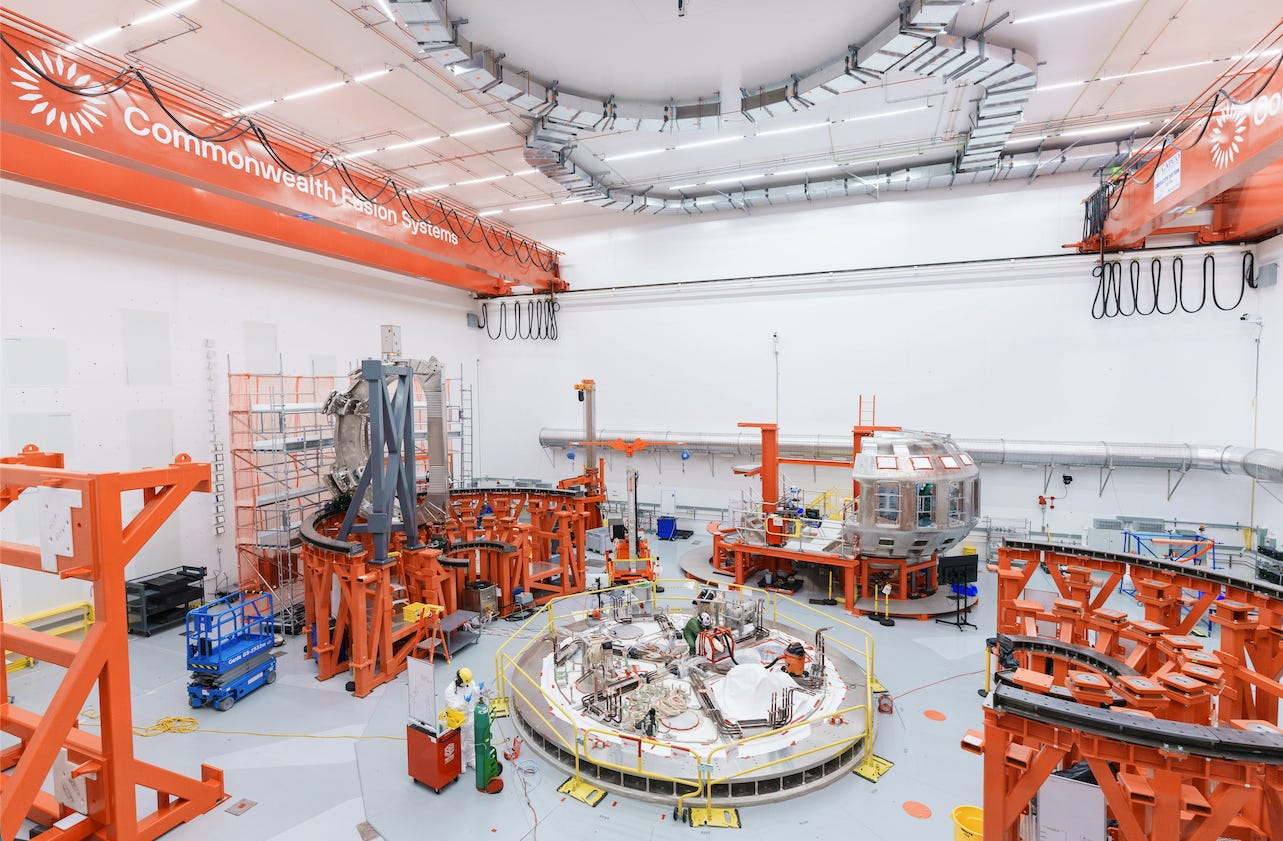
A trio of companies including Nvidia announced Tuesday that it’s using AI to accelerate the development of fusion that’s eluded innovators for decades.
Why it matters: Fusion, the energy that powers stars, has long had unrealized potential to provide vast swaths of clean, stable electricity for the AI boom and to cut emissions.
Driving the news: Commonwealth Fusion Systems (CFS), leveraging data from Siemens and an AI platform from Nvidia, is creating what it calls a “digital twin” of its demonstration machine to speed progress toward commercial fusion.
Read the full story in Axios.