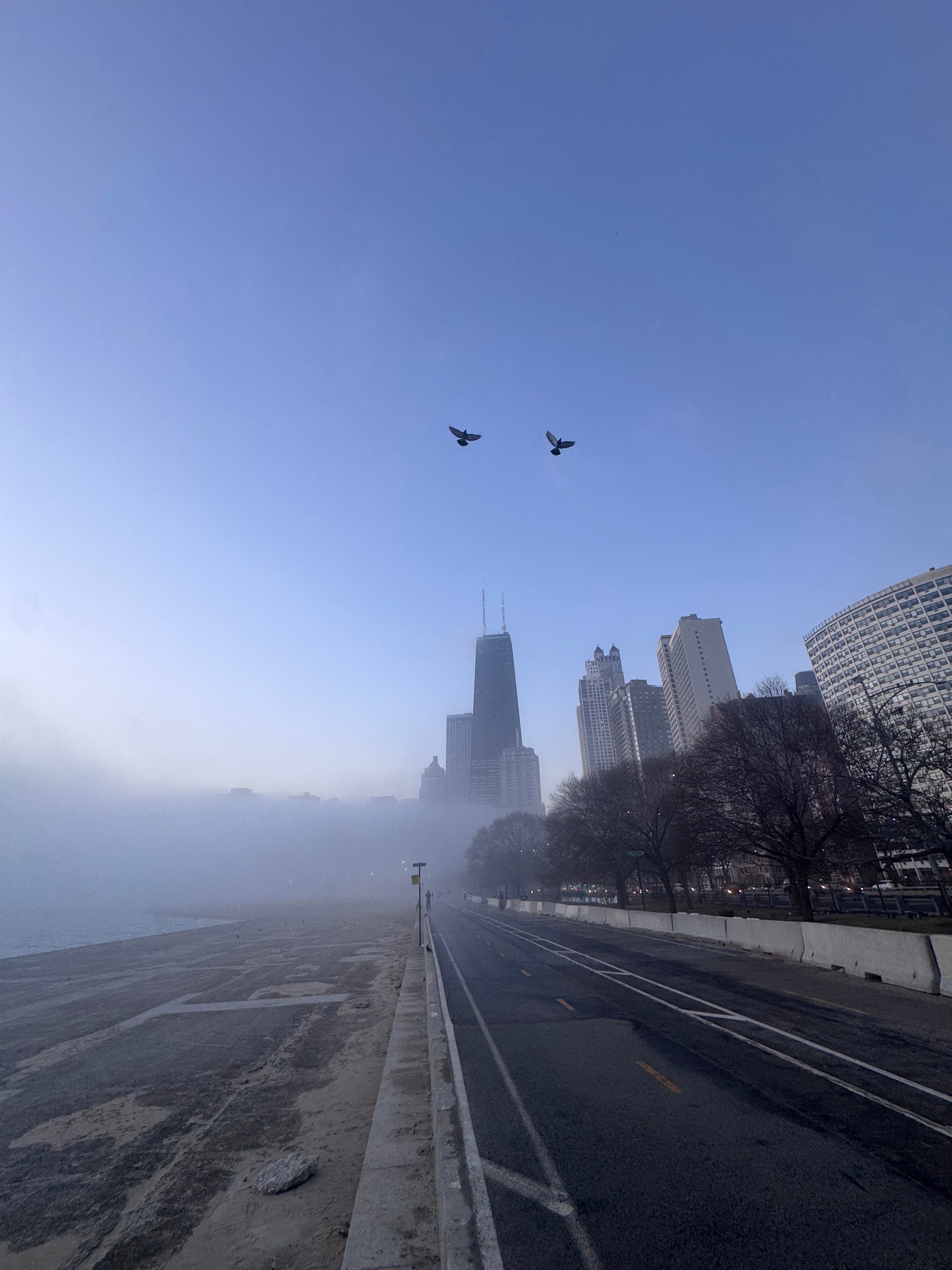
Greetings from the windy city, where Chicago is living up to its cold winter reputation (scroll down for proof from my morning run).
I’ve been here to moderate an event for the Aspen Institute (more info here), and meet with my fellow colleagues on the University of Chicago’s Shocked podcast.
✈️ Last week, I hosted a keynote conversation at the Dallas Fed’s first-ever AI and energy conference. And later this month, I head to the energy Super Bowl in Houston (aka CERAWeek) to help host conversations with Axios.
🎙️ The grid is too slow for AI and more declarations from yours truly in this SunCast podcast I recorded while in San Diego last month for a solar confab.
And now, read on for my latest in Axios.
Trump White House still has solar panels
The White House is (still) getting energy from solar panels that his predecessors put on its roof, Axios has learned.
Why it matters: The panels have somehow endured through President Trump’s criticism of renewable energy and his Democratic predecessors.
Driving the news: Axios reached out to the White House as part of a story about how oil-price spikes — like those following the Iran war — typically set off debates about consumers moving toward electric cars and solar panels.
Flashback: Then-President Jimmy Carter first put solar panels on the White House following the 1970s oil crisis in a direct nod to domestic energy security.
His predecessor, Ronald Reagan, removed them a few years later.
Fast forward a few decades. President George W. Bush’s administration added back solar to heat water and a swimming pool. When President Barack Obama moved in, another set went up on the roof.
State of play: Trump didn’t remove them during his first administration. And they remain there today.
In addition to confirmation from the White House, they’re visible from Google satellite images.
A White House spokesperson wouldn’t comment on whether there are any plans to remove them or otherwise update them.
Between the lines: Although Trump has been critical of solar power, he has directed most of his — largely unfounded — criticism toward wind power, especially offshore wind.
The intrigue: Solar has recently gained some new supporters among MAGA influencers, including Katie Miller, wife of deputy chief of staff Stephen Miller.
What we’re watching: Whether the rooftop of the new ballroom might sport any panels.
Share this story from Axios.
Why oil price spikes (probably) won’t lead to lasting shift
Oil prices would need to stay high for years — not weeks or months — to drive a lasting shift away from the fossil fuel.
The big picture: Every time oil spikes, the same question surfaces: Will this push more people into electric cars or install solar panels onto rooftops?
State of play: That’s happening again after oil prices zoomed past the $100-a-barrel mark in the wake of the Iran war.
Driving the news: Prices dropped at least temporarily in the wake of President Trump signaling Monday evening he wants a quick end to the conflict, as well as talking up ways to lower oil prices.
Reality check: Energy transitions hinge on stable policies and market signals that last for decades.
Temporary price jolts from unstable geopolitical unrest haven’t produced durable change — at least not in the U.S.
What they’re saying: “Consumers have been riding an oil price roller coaster for 20 years now,” said Bob McNally, who leads consultancy Rapidan Energy Group and advised President George W. Bush on energy security.
This includes everything from the 2008 recession to the 2020 COVID-19 pandemic.
“They’ve learned that booms follow busts, and vice versa. Absent stable and higher fuel prices, we are unlikely to see a rapid and lasting shift to EVs.”
Read the full story in Axios.
American gas bounty shielding consumers from war spikes, for now
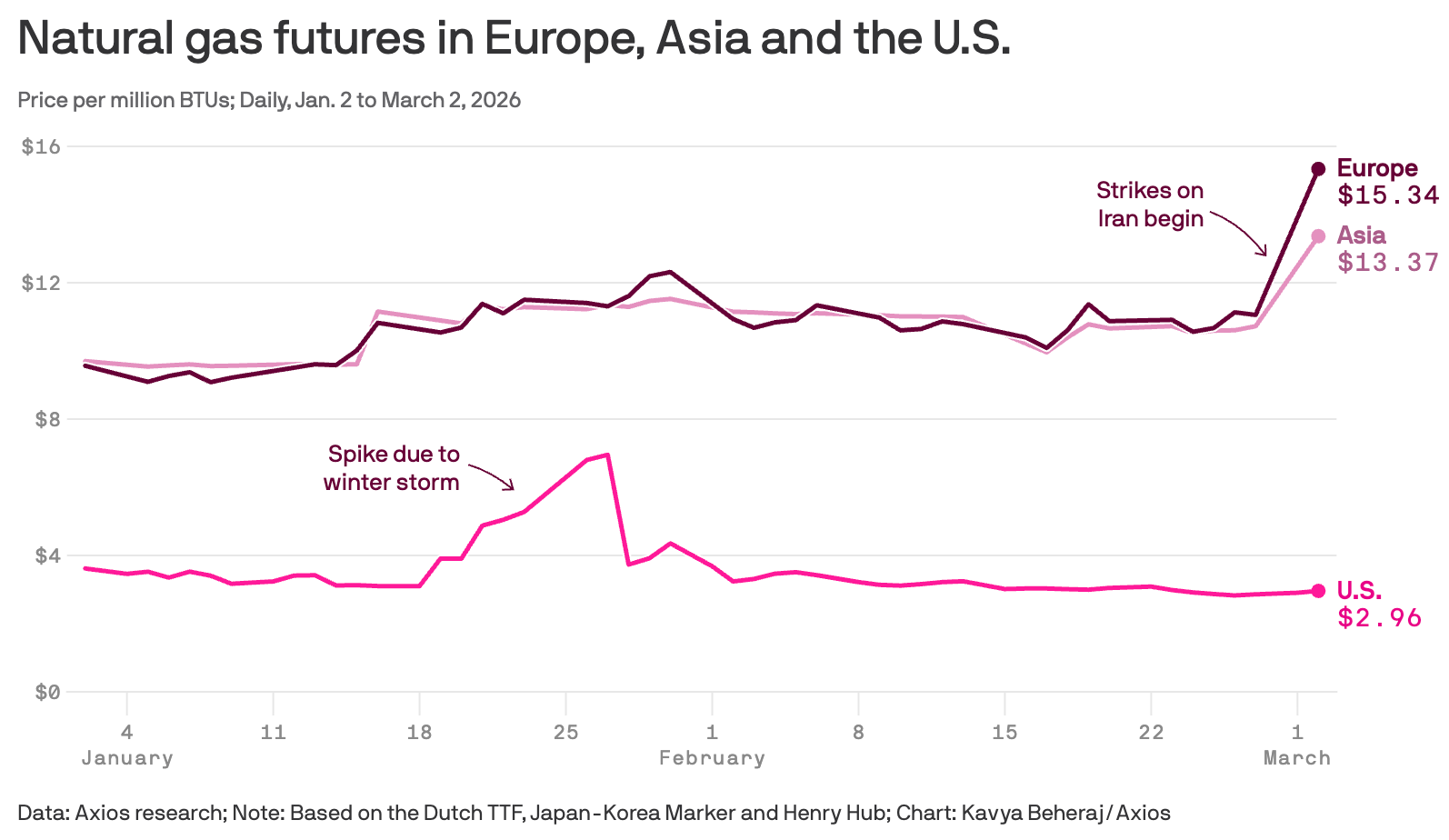
America’s natural gas bounty is acting like a moat, largely shielding the U.S. from price spikes while much of the world reels from escalating unrest in the Middle East.
Why it matters: Natural gas hasn’t, historically, drawn the same headlines as the more volatile oil markets. But it’s increasingly central to the economy — including powering the AI boom.
Yes, but: The moat isn’t impenetrable. And if substantially more American natural gas gets exported, it could raise heating and electricity bills.
The big picture: Fueled by fracking, the U.S. has been the world’s largest natural gas producer since 2011. Since 2022, it’s also been the largest exporter of liquefied natural gas (LNG), the fastest-growing segment of the global gas trade.
That dominance provides a cushion when overseas supply is disrupted.
What they’re saying: “The U.S. covers all of its domestic demand with its own production but then produces more to export,” said Alex Munton, director of global gas and LNG for research and consulting firm Rapidan Energy.
“So when things happen internationally, that doesn’t create problems for consumers in the U.S.”
Read the full story in Axios and check out this striking chart ⤵️
Dallas Fed tackles AI and energy

🛢️ 🛢️ 🛢️ The Federal Reserve Bank of Dallas, known for its leadership on oil and gas, just hosted its first-ever AI and power conference.
The topics overlap, but it's also a new area for the bank.
I had the pleasure of hosting the keynote opening interview. Read more about the event here.
The fog of war Chicago