What’s in here ⤵️
My latest Finish Line column from Axios: Life lessons from a glacier
The AI sector launches new energy alliance
Costs take center stage at New York’s Climate Week
📸 Epic glacier and iceberg photos!
What glaciers and icebergs show us about life
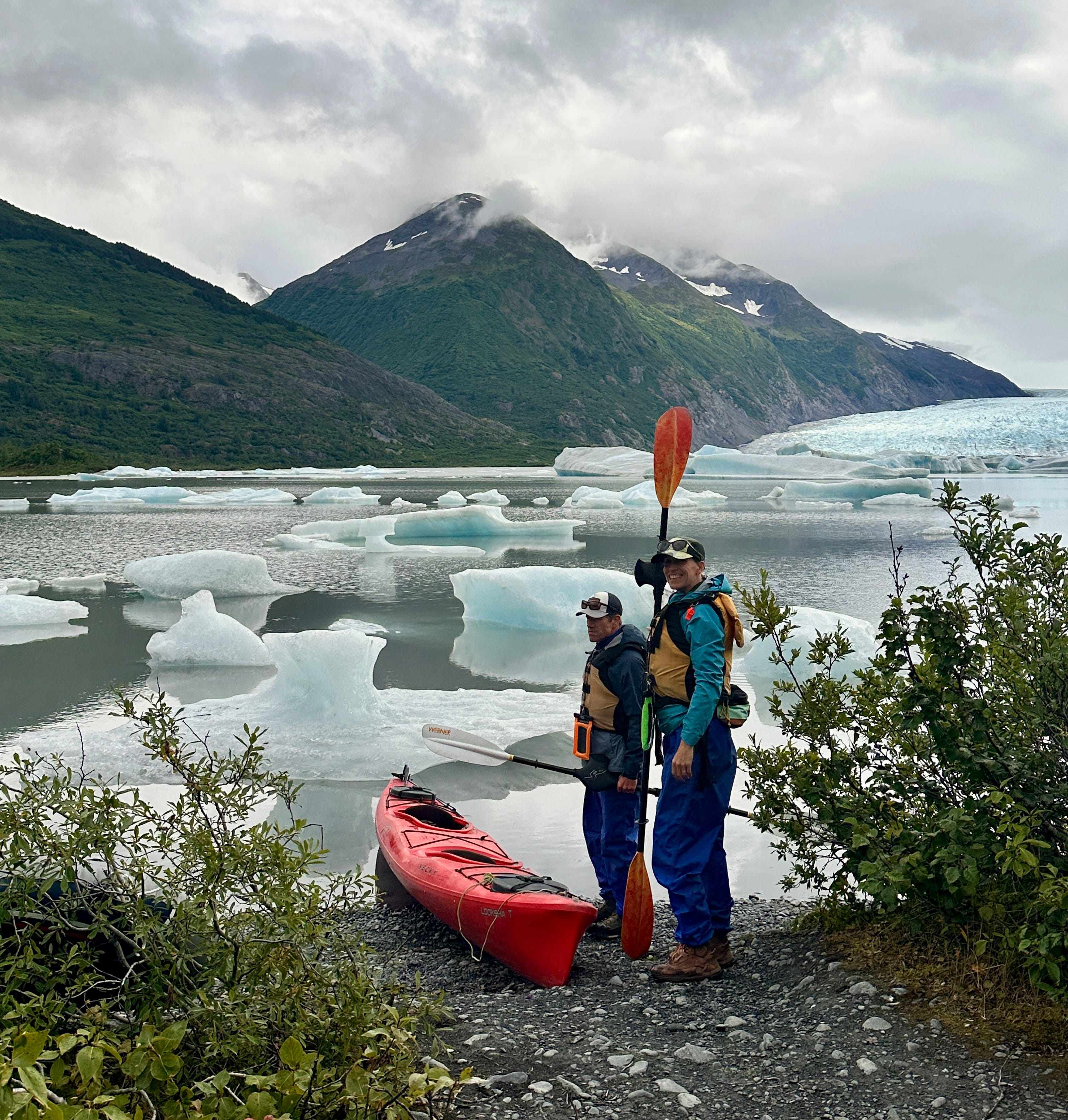
SPENCER GLACIER, Alaska — Sure, seeing is believing, but sometimes seeing leaves you in disbelief. That happened to me while kayaking among icebergs here recently, as the landscape transformed before my eyes.
Why it matters: I began the excursion certain of what I was seeing. I ended it with my mind blown — by the sheer scale of nature and by how much perspectives can change.
State of play: The glacial lake here, not far from Anchorage as the crow flies, is accessible only by the Alaska Railroad train.
The glacier and lake looked rather small as we approached it on foot with our kayaks in tow. I felt a tinge of disappointment.
I figured the glacier was maybe a half-mile away, with dainty-looking icebergs in between us. Then our guide told us it was 2 miles away. No way, I said, as confident as ever.
“I’m fine being wrong,” the guide joked with equal parts politeness and sarcasm. He used to teach ninth grade (and it showed — in a good way).
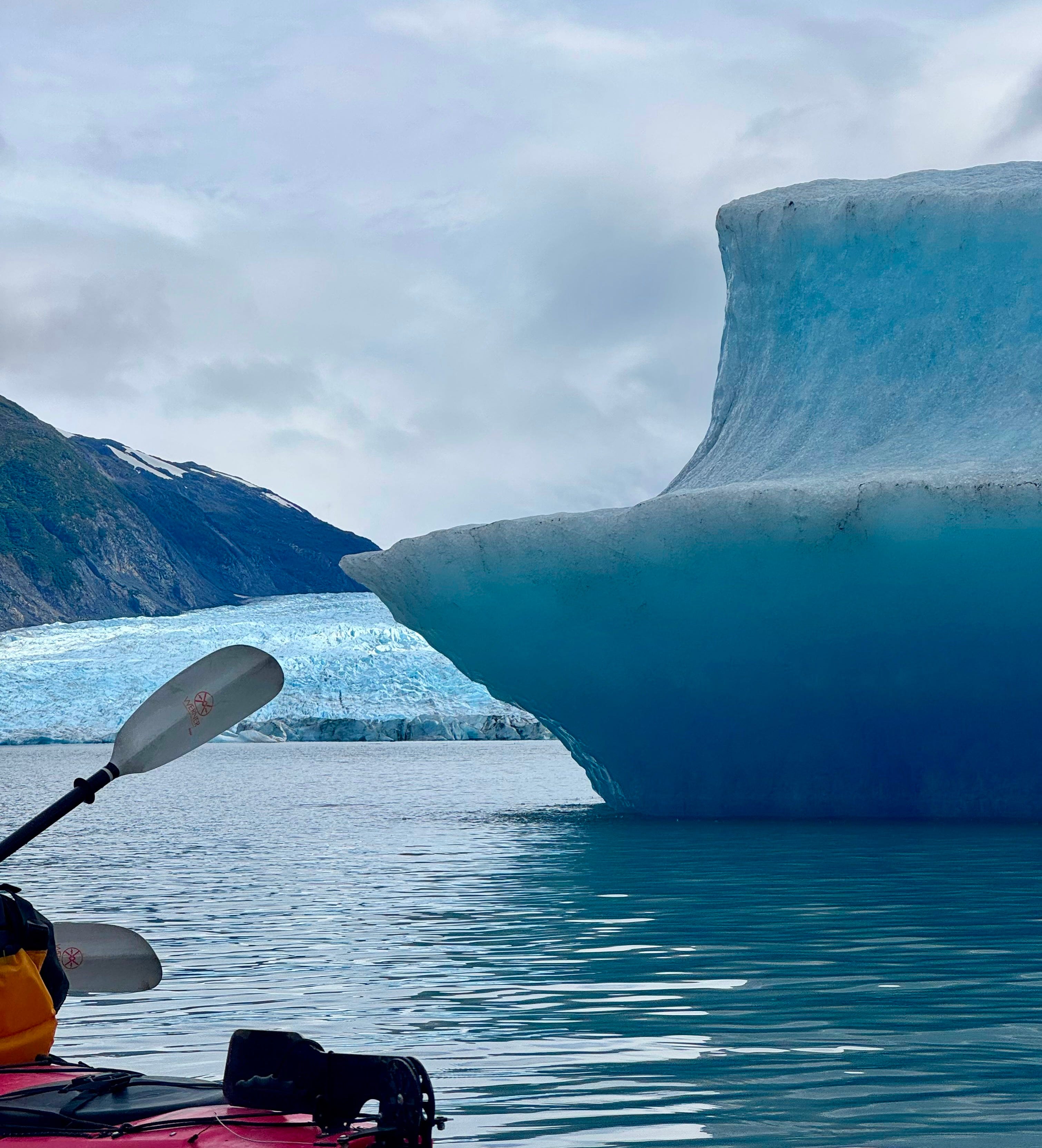
Once we got into the water and started paddling, my entire field of vision changed dramatically in an extreme manifestation of “motion parallax.” I soon realized how small I was, how big those icebergs were and how far away that glacier really was.
So yes, he was right, and I was wrong.
How it works: “Motion parallax” is a common phenomenon we experience when moving. It’s why trees whiz past us while driving but mountains in the distance barely seem to move. Glacial landscapes can put this phenomenon — and our struggles to perceive depth and scale — on steroids.
From shore, nearly everything in my field of vision was enormous — mountains, ice, water — leaving me with few familiar visual cues to grasp just how big or far away anything really was. Trying to show you, dear reader, the visual tricks the setting was playing on me is difficult even with photos!
When we started paddling, movement — and our kayaks themselves — gave my brain new information.
The big picture: It was strangely empowering to be so wrong. I was confident in what I was seeing, and then my guide — and eventually my own eyes — showed me otherwise.
That sense of wonder has lingered, making me curious about what else I might be so sure about — and wrong about.
It was also a reminder that, from a distance, people and problems can look smaller, simpler and more obvious than they really are. Get closer, learn more and add context, and the picture can change dramatically.
The bottom line: Sometimes changing your mind isn’t a sign that you saw things wrong. It’s a sign that you’re finally seeing more.
Share the full story in Axios.
Tech giants launch flexible-power coalition for data centers
A new coalition launched Wednesday is seeking a triple win for a data center industry that lately has struggled to notch any wins at all.
The big picture: Tech giants Google and Nvidia are partnering with startup Emerald AI to back data centers that can flex their power demand — a strategy they say could curb electricity prices, mollify angry neighbors and grow the economy with more AI infrastructure.
The launch comes amid mounting backlash to data centers centered on their resource impacts and power prices, and new polling shows the public-opinion challenge is getting steeper.
What they’re saying: “It’s really a win-win-win solution,” said Josh Parker, head of sustainability at Nvidia, in a call with reporters Monday ahead of the official launch of the coalition, called the AI Energy Management Alliance.
State of play: The coalition brings together 20 companies and organizations spanning the AI and energy sectors, including Anthropic, utilities National Grid and AES, and power producers Constellation, NRG and RWE.
Costs take center stage at New York’s Climate Week
Climate change is still melting ice and threatening polar bears, but the conversation at New York’s upcoming Climate Week is centered on something much closer to home: the cost of energy.
Why it matters: With the Iran war pushing up energy costs, the AI boom driving power demand and the midterms looming, affordability is becoming a central test for climate action.
Driving the news: Two reports released Thursday show how affordability is reshaping the energy transition.
S&P Global finds the world’s most ambitious climate targets increasingly out of reach as energy demand soars in developing economies where affordability and security are cementing their place as top priorities.
The U.S. Energy Storage Coalition framed its entire report around affordability: Scale batteries rapidly because they’ll save money. Its analysis estimates broad storage deployment could save the U.S. power system at least $250 billion over the next decade.
“This climate week is also going to be energy security week and energy affordability week,” said Dan Yergin, vice chairman at S&P Global.