
Greetings from Vancouver, BC!
Come for the news, stay for the pretty nature shots!
I joined the Rapid Response podcast to talk about the huge parallel energy stories of the Iran war and the AI boom.
Latest Axios bylines ⤵️
The energy squeeze behind the Iran war and AI boom
Energy — whether it be oil for cars or power for data centers — is suddenly the world’s biggest constraint.
Why it matters: Energy is becoming the singular driver of both global stability and economic growth.
Oil shocks from the Iran war are rippling through inflation and geopolitics.
The AI boom is triggering a global race for electricity that grids aren’t ready for.
The big picture: Energy is the thing we all need but don’t notice until it’s gone or expensive.
We’re confronting both unprecedented scarcity and demand for energy on a timeline that’s considered remarkably sudden for the usually slow-moving energy sector.
Driving the news: Higher oil prices fueled by the Iran war are the main driver behind inflation, with the Consumer Price Index rising 3.8% in April, new data out this week shows.
Higher energy prices accounted for the bulk of the increase between March and April, Axios’ Courtenay Brown reported.
Compared with the same period a year ago, energy costs are up 18%.
Meanwhile, trouble is also lurking in our power lines.
The nation’s grid watchdog took the unusual step last week of issuing its highest level warning that exploding power demand from AI data centers could strain electricity systems.
How it works: At first glance, the Iran war and the AI boom may not seem to have much overlap.
Oil is primarily used in transportation, after all, so most of the impact hitting the economy is through gasoline and driving.
Data centers, on the other hand, require electricity, which is not directly impacted by the war (at least in the United States, thanks in part to ample supplies of domestic natural gas).
Reality check: Whether in our vehicles or our light switches, energy serves the same purpose: it’s the engine that makes things go — or the bottleneck that mucks everything up.
What they’re saying: “Whether the issue is oil-supply disruption or power-sector strain, the lesson is the same,” said Jason Bordoff, founding executive director of Columbia University’s Center on Global Energy Policy.
“When energy is unavailable, unreliable or unaffordable, economies slow, public anxiety rises, and policymakers have little room to focus on anything else.”
Between the lines: Even though U.S. electricity isn’t directly affected by the war, power prices are going up anyway — partly due to data centers.
Voter discontent with high power prices could collide with parallel discontent with high prices at the pump.
Friction point: High energy prices could help fuel growing populist sentiment across the country that’s also being fanned by worry about AI displacing jobs.
“Rising energy prices and fewer jobs are making it harder for people to get by and could fuel a feeling that elected officials are not looking out for their interests,” Bordoff said.
Yes, but: Data centers are driving a far larger share of power growth in the United States compared to the world as a whole, according to the International Energy Agency.
The bottom line: From battlefields to data centers, the next phase of the global economy will be shaped by who has energy — and who doesn’t.
Share full story here from Axios.
A closed Strait of Hormuz was once unthinkable
Closing the Strait of Hormuz was once considered so unthinkable that energy experts were "laughed out of the room" for even considering it in their models.
The critical waterway has been effectively closed for months, creating a global economic crisis, and there's no real playbook for what comes next.
The strait is the single most important chokepoint in the global energy system.
Some experts seem to have believed, on some level, that it was effectively too big to fail.
In at least two major exercises assessing potential oil disruptions, experts considered a full shutdown, but ultimately didn't model it in their planning because it was deemed either too unlikely or too large in scale to meaningfully plan around.
Exclusive: Data center firm inks carbon removal deal
NTT Data, a major data center operator, is buying carbon removal credits from startup Climeworks to help meet its climate goals, the companies exclusively shared with Axios on Thursday.
Why it matters: Surging energy demand from AI is increasing scrutiny of data centers’ emissions — and could expand the pool of buyers for carbon removal as the sector faces setbacks.
Driving the news: Japan-based NTT Data Group has agreed to buy an unspecified amount of carbon removal credits from Climeworks — the first agreement between the Switzerland-based startup and a major AI infrastructure company.
The companies aren’t disclosing terms of the agreement, but Climeworks co-CEO Christoph Gebald said the deal could provide a few hundred thousand tons over a decade.
Reality check: That’s meaningful for a nascent industry, but it’s quite small relative to the emissions tied to the AI boom — to say nothing of the far greater reductions needed to avoid the worst impacts of climate change.
The intrigue: The fact that the partnership exists at all could signal the beginning of a trend within the AI industry.
“We’ve seen increased interest in carbon removal because of the buildout of data centers,” said Giana Amador, founding executive director of the Carbon Removal Alliance.
Journey to America’s northwestern most tip
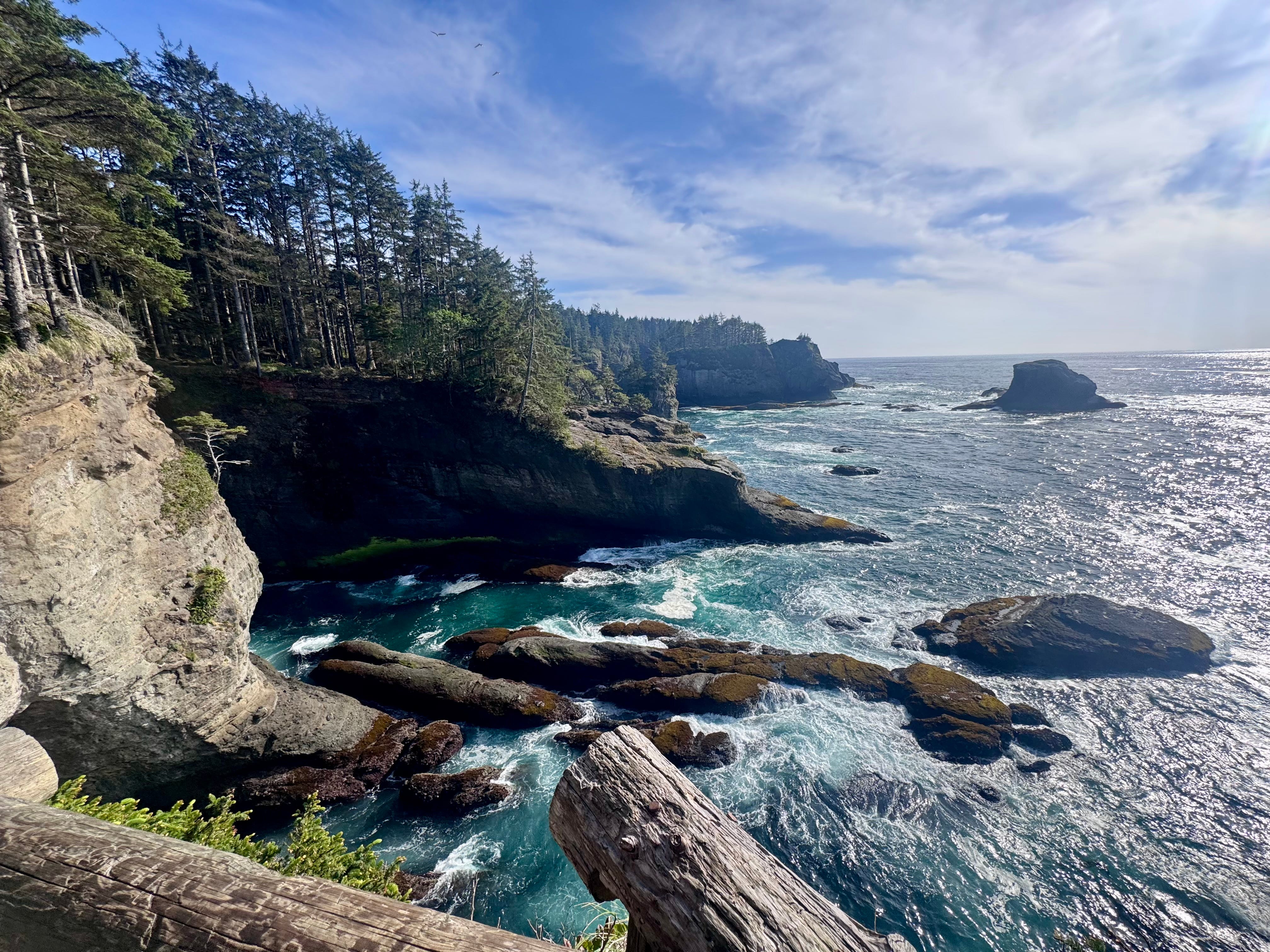
I recently returned from Neah Bay — at the northwestern tip of America — after a couple days there as part of my volunteer board work with The Nature Conservancy in Washington State.
I appreciated the opportunity to spend time in nature and learn more about the history and stewardship of the Makah Nation and the landscapes of their home.
Check out more photos here.
Running wild with the salmon
I recently attended the world premiere of the documentary, Running Wild: Return of the River, which documents the incredible journey Pacific salmon take to return to the stream where they were hatched after traveling thousands of miles.
It reminded me of a November 2025 run I did in the forests outside of Seattle, where I saw salmon both alive + swimming and dead + decomposing — to the great benefit of the ecosystem.